WeShare Online Giving

Make your donations to The Catholic Faith Appeal online here:

CFA

Learn more about The Catholic Faith Appeal and how to make paper donations here.

Verlo en Español.

You can make donations to St. James parish here:

Thank you for your support! It is appreciated!

Welcome

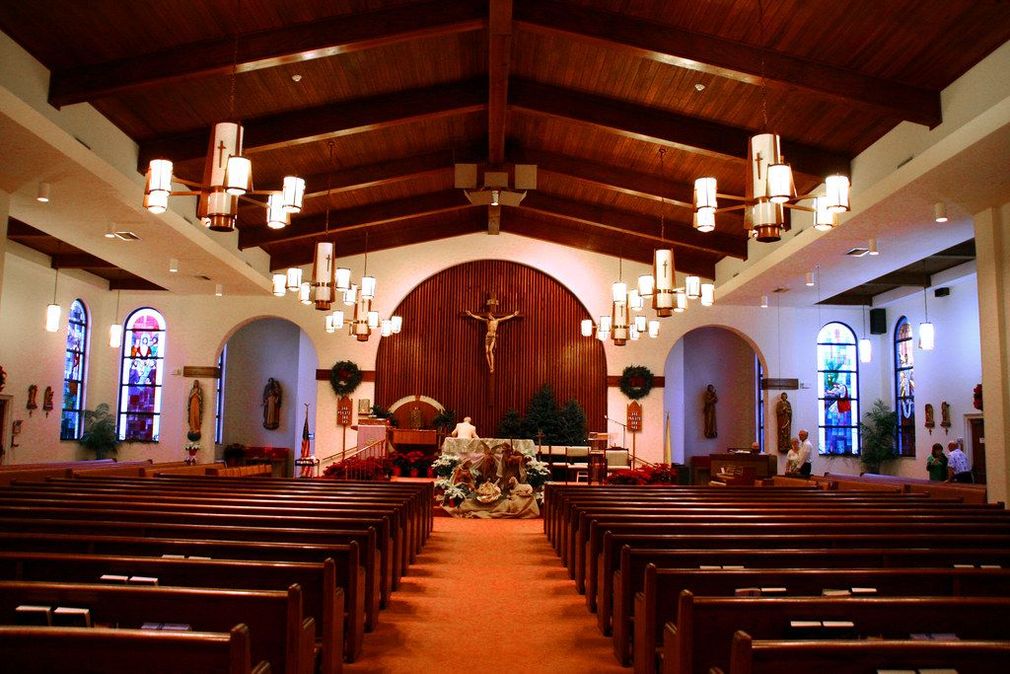
As members of the Body of Christ, the parish of St. James, Lake Placid, Florida proclaims our belief in the message and mission of Jesus Christ. 

"Go, therefore, and make disciples of all nations, baptizing them in the name of the Father, and of the Son, and of the Holy Spirit, teaching them to observe all that I have commanded you. And behold, I am with you always, until the end of the age." (Matt 28:19-20)

With God's Grace, the example of Jesus, and the guidance of the Holy Spirit, we seek to live out that belief as a community of worship, of shared faith and of service where each member shares with others the gifts and talents received from God.


Join our Flocknote! Stay informed on the things you care about!
 

      Like us on Facebook 


Sign up for the Florida Catholic e-edition.
 

Mass Times

MASS TIMES:
Weekends
Summer Mass Schedule (June - September)
Saturday Vigil 4 PM
Sunday 9 AM
Winter Mass Schedule (October - May)
Saturday Vigil 4 PM
Sunday 8 AM and 10 AM
Weekdays (M - F) - 9:00 AM
First Saturday of Every Month
9:00 AM (with Anointing of the Sick)
Holy Days
7:00 PM Vigil, 9:00 AM Morning

Office Hours - For emergencies call 863-465-3215

Monday, Tuesday, Thursday, Friday
9:00 am to 12 noon
12:30 pm to 3:00 pm

Wednesday
9:00 am to 12:00 noon

3380 Placid View Dr.
Lake Placid, FL 33852

 Fr. Vincent Clemente

Pastor, Fr. Vincent Clemente

Father Vincent came to the United States from Italy at the age of 15, where his family settled in the Cleveland, OH area. He has one sister. Father was ordained to the priesthood on May 8, 1976 and has previously served at St. Martha’s in Sarasota, FL and as pastor of St. Michael in Wauchula and St. Paul in Arcadia.

 Fr. Felix Gonzalez

Parochial vicar Fr. Felix Gonzalez

Fr. Felix Gonzalez, our newest parochial vicar, was born in Venezuela on September 18, 1953. He studied philosophy in Trinidad & Tobago, West Indies and theology at the Seminary “Santa Rosa de Lima,” Caracas, Venezuela. He was ordained on July 18th, 1981 at the .Archdiocese of Barquisimeto. He came to the United States 20 years ago and studied monastic spirituality in Worcester, MA and worked in different parishes in the Archdiocese of New York— Manhattan and the Bronx. During those years he studied in IONA College and graduated with a Masters in Science, majoring in pastoral counseling. After serving St. Leo for almost two and a half years, he is happy to embark on this new part of his spiritual journey.


Our commitment to a Safe Environment

As Christian adults, we have a moral and legal responsibility and are entrusted by God with the spiritual, emotional and physical well-being of minors and vulnerable adults. St. James adheres to the Diocese of Venice's Safe Environment program. To learn more, visit: https://dioceseofvenice.org/offices/programs/safeenvironment/

Pope Francis' Letter to the People of God, regarding sexual abuse in light of the outcome of the Pennsylvania Grand Jury.


My Dear People,

The Beatitudes are new teachings Jesus gives to us and are different from the Commandments. The Beatitudes tell us what to do; how to be holy by having a pure heart, and what our hearts’ disposition should be. I will point out just some of the Beatitudes as there is not enough space to include all. 

First, we should recognize when Jesus went up on a mountain to teach, it is a Mosaic motif. Moses was the great teacher of Israel, and he climbed Mount Sinai to teach the law of God. Jesus is recapitulating this motif. Jesus, the new Moses, will teach a better law and correct some of the compromises that Moses introduced into Israel’s legislation. (Matt 5:21-48).

Now, with respect to the Beatitudes (which are just an introduction to the Sermon on the Mount and not synonymous with the entire Sermon, Matt 5-7), we should note that there are eight main ones, followed by an epilogue on persecution (vv. 11-12). The Beatitudes are about the kingdom of heaven.  Specifically, they are the virtues that are required of the kingdom citizens. 

Finally, we should note that the Beatitudes are not a simple grab-bag of random virtues, but there is a certain progression as we move through them. They are all interrelated, and to a certain extent they move from one to the next. 

Blessed are the poor in spirit, for theirs is the kingdom of heaven. 

The primary reference—poverty of spiritis a recognition of one’s spiritual bankruptcy which needs to be filled with God’s spiritual riches; that is, His Spirit, granted by faith through the sacraments. Nonetheless there is a relationship with material poverty (material riches can be a great distraction to the spiritual life), sidetracking us to pursue goals other than following God. Elsewhere, Jesus will warn about seed that is choked by the “anxieties and riches and pleasures” of this world.  (Luke 8:14).

For this reason, many of the saints have understood “poor in spirit” to be “poor for the sake of the Spirit,” that is, temporarily poor for the sake of spiritual ends. Thus, those who go into religious life take a radical vow of poverty. But even laypeople should practice restraining material wealth. How do we practice it? The principle of St. Josemaria was “have nothing unnecessary.” He encouraged laypeople to pare their belongings down to what they really needed for their vocation, and then to take care of those things so that they would not constantly be wasting money by replacing them. Thus “poor in spirit” refers to spiritual poverty but nonetheless is tied to living a form of temporal poverty as well, because temporal indulgence is incompatible with spiritual poverty. 

Blessed are those who mourn, for they will be comforted. This refers to those who mourn for their spiritual poverty, for their nothingness, emptiness, and for their sins. Thus, recognizing that you are “poor in spirit” leads to contrition (sorrow of sins), but that is good because God will comfort the contrite. 

Blessed are the meek, for they will inherit the land.  Meekness is roughly the same as humility. It is the virtue of  not putting oneself forward, not throwing your weight around, being docile. Citizens of the kingdom of heaven are meek or humble because they realize they are spiritually poor, that they really aren’t much, when considered by themselves without God’s grace. 

Blessed are they who are persecuted for the sake of righteousness, for theirs is the kingdom of heaven. The kingdom citizens who live the virtues of the Beatitudes will be hated by those who don’t want to give up their lustful ways because, first of all, the discipleship is a painful reminder to others that they are not following the way of God, and secondly the disciple becomes an impediment to others fulfilling their lusts because he will not cooperate.

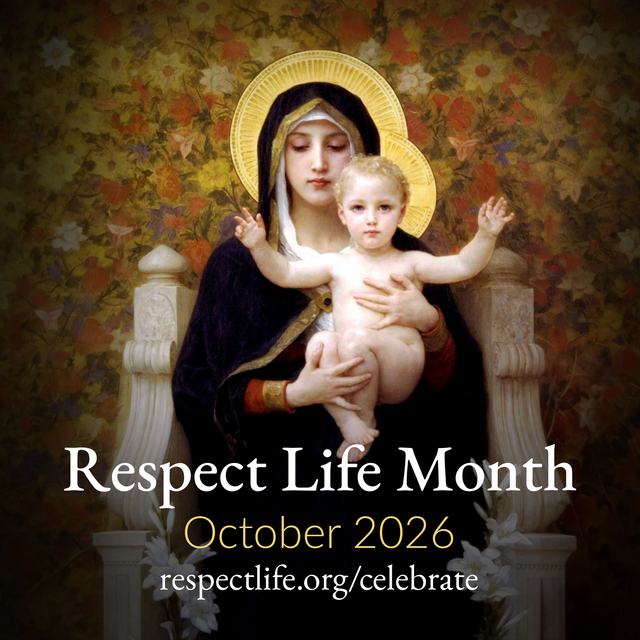
Only in this way can we understand the hyperbolic venom and slander aimed at the pro-life movement. For example, legal protection of the lives of the unborn would mean persons in our society would have to restrain their sexuality (which is a form of lust of the flesh). Those who live chastely remind others of the dignity of the unborn child and are an unwelcome reminder and impediment to the rest of society in its pursuit of unrestrained indulgence in the lust of the flesh. Songs for, slander, dismissiveness, and other behaviors are expressed toward those who advocate for the unborn. 

And, nonetheless, persecution of Christians in most western nations still does not approach the kind of physical brutality Christians in Muslim and communist countries continue to experience. Waves of persecution come with a blessing, because it assists us in gaining detachment from the things of this world, thus helping us to live a life of spiritual poverty. So, persecution makes us poor, which brings us full circle to the first Beatitude: Blessed are the poor in spirit.”

Jesus, Son of David, came to reestablish the kingdom of the Lord on earth. But Jesus’s kingdom is an upside-down kingdom that calls good what the world calls bad, and bad what the world calls good. This Sunday’s readings call us to leave the ways of the world and practice the virtue of citizens of the kingdom, but also warns us this choice we make is to travel upstream against the current of our culture.

[Passages taken from Sunday Mass Readings for Year A by John Bergsma]

Yours in Christ, 

Fr. Vincent Clemente

Upcoming Events

JANUARY 25th—Sunday. Faith Formation, 11AM Social Hall.

JANUARY 26th—Monday. OCIA, 6PM, Social Hall.

JANUARY 30th and 31st. Trash and Treasure Sale, 8AM to 1PM, Social Hall.

FEBRUARY 1st—Sunday. Faith Formation, 11AM Social Hall.

FEBRUARY 2nd—Monday. St. Vincent de Paul, 2PM, Social Hall. OCIA, 6PM, Social Hall.

FEBRUARY 3rd— Tuesday. Child. of Our Lady, 10AM, Social Hall. Grupo de Juan 23, 7PM, Social Hall. 

FEBRUARY 4th— Wednesday. Bible Study, 10AM, Social Hall. Divine Will Group, 4PM, Social Hall. Conf. Class, 6:30PM, Social Hall. 

FEBRUARY 5th— Thursday. CCW Meeting, 10AM, Assisted Living Presentation, Social Hall. Charismatic Prayer Group, 6:30PM, Social Hall. 

FEBRUARY 6th— Friday. Kraft Korner, 10AM-12PM, Social Hall. Youth Group, 6PM, Social Hall. 

FEBRUARY 8th—Sunday. Faith Formation, 11AM Social Hall. Sunday Brunch Gathering, 11AM-12PM, Social Hall.

FEBRUARY 9th—Monday. OCIA, 6PM, Social Hall.